
That Smell (Fragrance) Might Be Affecting More Than You Think
What is Fragrance?
“Fragrance” might sound simple, but on an ingredient label, it can be one of the most complex ingredients listed.
You may see it written as:
Fragrance
Parfum
Perfume
These terms are often used as a catch-all for a blend of chemicals added to give a product its scent.
That scent could be anything from “fresh laundry” to “vanilla,” “ocean breeze,” or “unscented.”
Even products labeled “unscented” can still contain fragrance ingredients used to mask other smells.
What makes fragrance unique is that companies are not required to disclose what is actually inside that blend. It is often protected as a trade secret, meaning a single word on a label can represent dozens or even hundreds of individual ingredients.
Where is Fragrance found?
You’ll often find it in personal care products like lotions, shampoos, conditioners, body washes, and deodorants.
It’s also commonly used in cleaning products, including surface sprays, dish soap, and even products marketed as “fresh” or “clean.”
Laundry is another major source of exposure. Detergents, dryer sheets, and fabric softeners are often heavily scented, and those fragrances stay on your clothes, your bedding, and anything else that touches your skin throughout the day (sometimes even YEARS! - watch my video on that!)
It doesn’t stop there. Fragrance is also found in candles, air fresheners, and diffusers designed to make your home smell a certain way.
What makes this important is not just where fragrance is found—but how often you come into contact with it.
Why do people avoid Fragrance?
For many people, the concern with fragrance comes down to one simple question:
What is actually in it?
Unlike most ingredients on a label, “fragrance” doesn’t tell you very much. It’s a blanket term that can represent a mixture of many different chemicals, and those ingredients are not always disclosed.
For some, that lack of transparency is reason enough to pause.
Others begin to pay attention after noticing how they feel around heavily scented products. Headaches, skin irritation, or sensitivity to strong smells can lead people to question what they’re being exposed to on a daily basis.
Fragrance is found in so many products it becomes a source of constant, repeated exposure throughout the day.
From your morning routine to your laundry to the scent of your home, it can add up quickly.
What's really causing your Headaches & Migraines?
One physical symptom that people don’t always connect to fragrance is headaches—especially migraines.
For some individuals, exposure to strong scents like perfumes, candles, laundry products, or air fresheners can act as a trigger.
This can look like:
A dull headache that comes on quickly
Pressure behind the eyes
Sensitivity to light or sound
Or a full migraine shortly after exposure
What makes this tricky is that people often don’t immediately connect the dots.
They might think:
“It must be dehydration”
“I didn’t sleep well”
“It’s just stress”
Meanwhile, the trigger could be something as simple as:
Walking into (or past) a heavily scented store
Walking down the 'stinky isle' of the grocery store
Freshly washed laundry (or your neighbors)
Sitting near someone wearing strong perfume
Why This Happens (Simple Explanation)?
Fragrance chemicals can stimulate the nervous system and olfactory pathways, and in sensitive individuals, this can trigger a neurological response—like a headache or migraine.
Not everyone reacts this way, but for those who do, reducing exposure can make a noticeable difference.
The Doable Approach:
When it comes to fragrance, this is often the point where people feel super overwhelmed. Once you notice it… you see (or smell) it everywhere.
Your shampoo
Your lotion
Your laundry
Your cleaning products
The scent in your home
It can feel like everything needs to change, but it doesn’t. Not all at once!
At Doable with Kate, the goal is not to remove everything overnight. It’s not about creating a perfectly “clean” home. It’s about reducing unnecessary exposure in the areas that matter most.
Start by asking:
Where am I exposed to this the most?
What do I use every single day?
For many people, the biggest sources are:
Air fresheners or plug-ins
Laundry products
Shampoo products
I'm going to share with you my favorite products and how to remove/reduce fragrance in your home.
Invest in your Family's air!
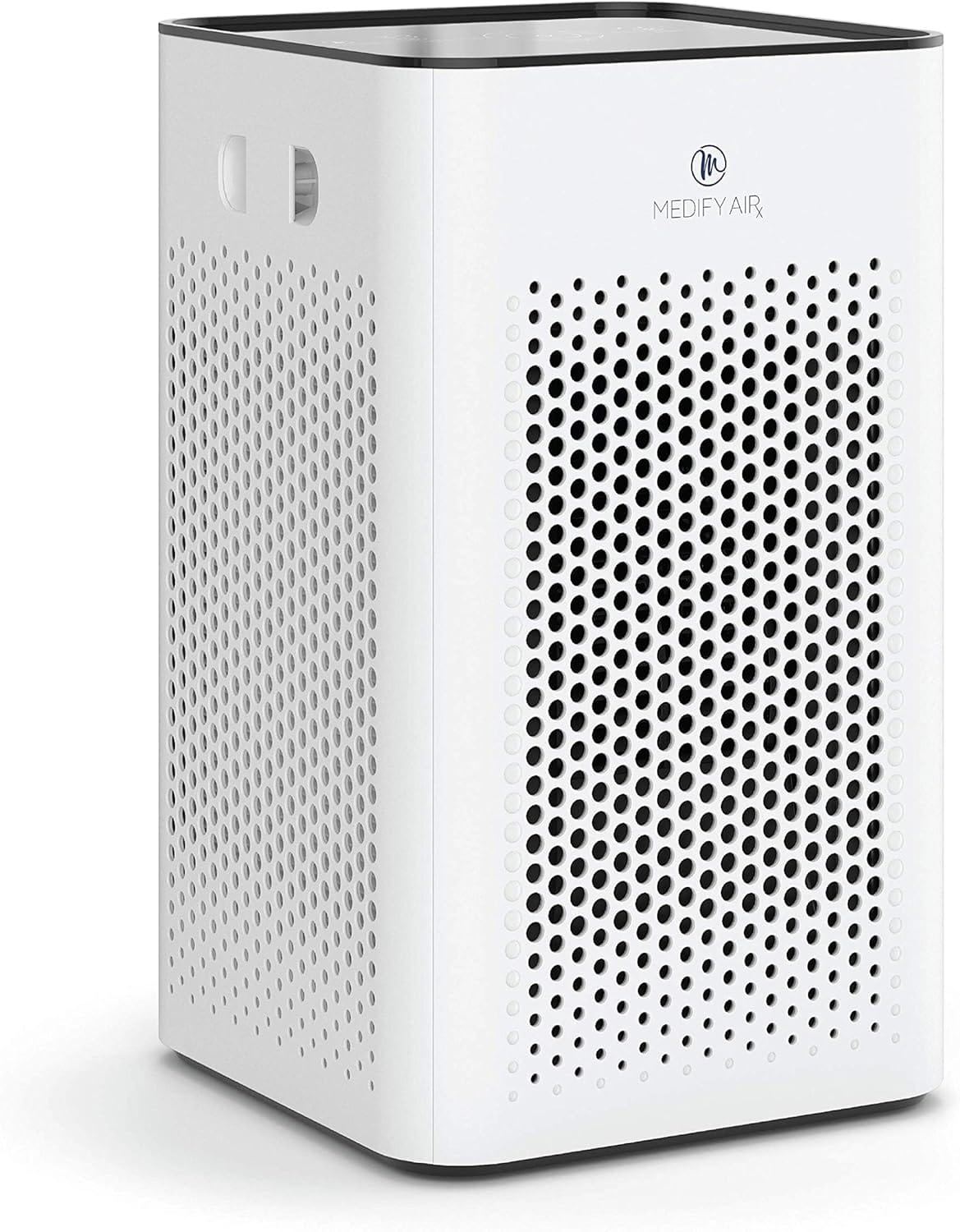
After removing the air fresheners, add a good air purifier! This is the one we use, recommend and have multiples around the house.
Remember when the Canadian wildfires ran ramped through the Northeast? We paused to invest in a few of these. The result: a house of clean air when others did not.
Laundry Detergent
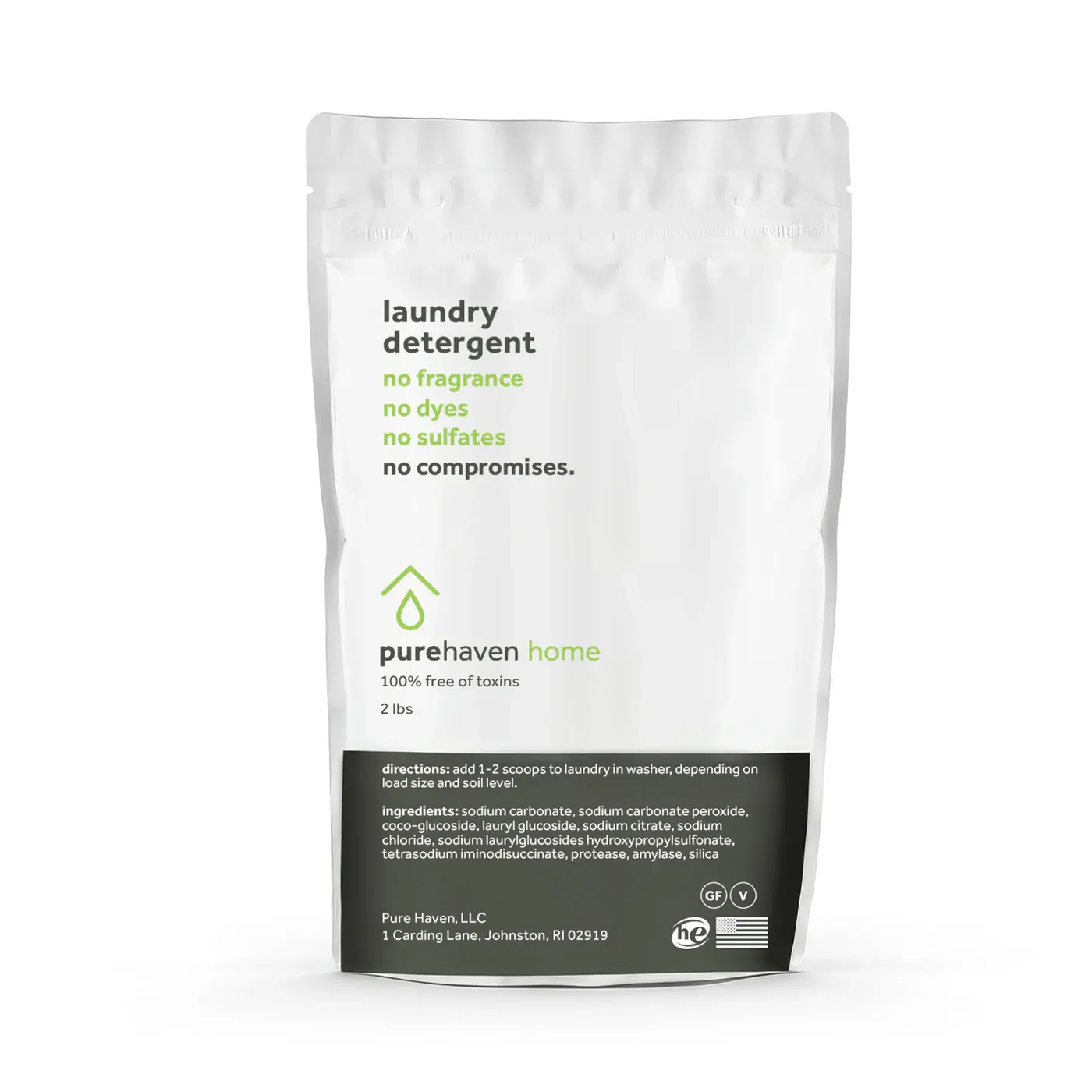
I love I can use 1-scoop per SUPER load and it lasts 2 months for a family of 4. (2 scoops for heavily soiled clothing)
Mommy's Shampoo
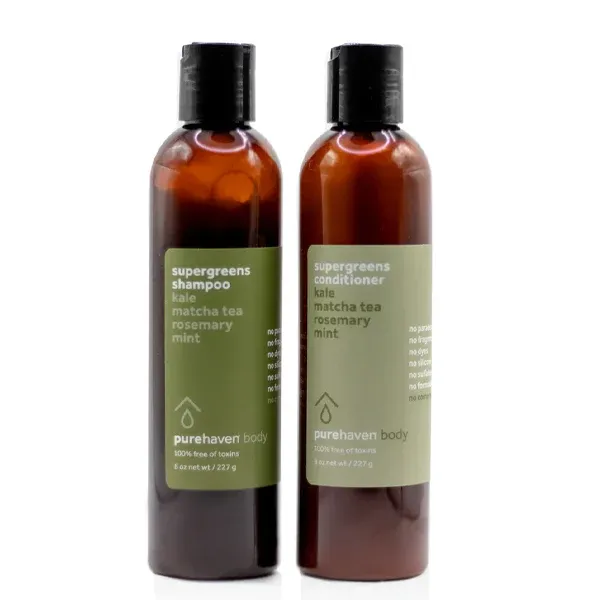
This is Mommy's shampoo and the kids have been warned and threatened, not to use for potions!
This is about reducing load, not eliminating joy.
One swap.
One upgrade.
One less daily exposure.
That is how sustainable change works.
In health & frequency,
— Kate

Hi, I'm Kate
As founder of Doable with Kate, I believe life and business should feel simple and aligned. My background in architecture shaped my love for structure and design, but my personal health journey led me into holistic wellness and non-toxic living.
Now I help women clean up their homes and businesses, build them systems that feel both authentic and profitable.


“Do the best you can until you know better.
Then when you know better, do better.” - Maya Angelou
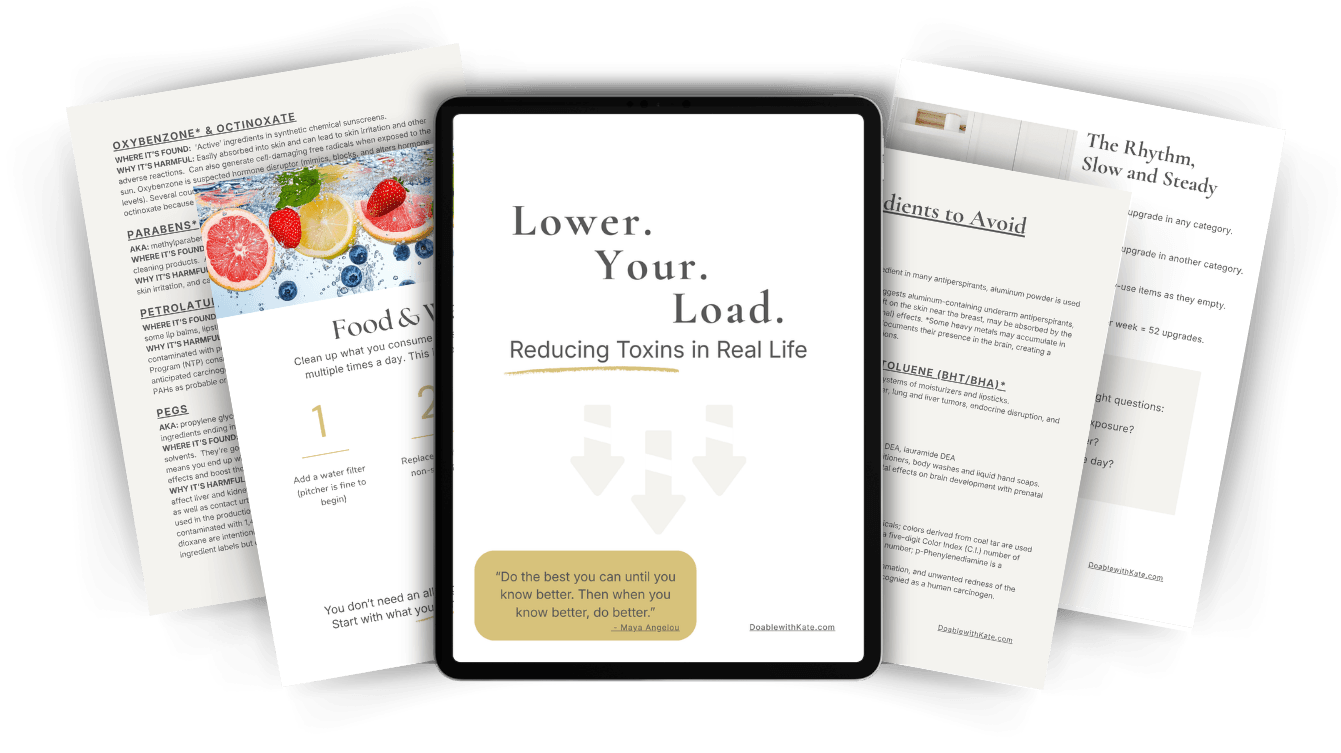
I've put together this guide 'Lower Your Load' explaining
the top 3 culprits of toxic exposure along with a
list of ingredients to avoid, so you can do better for yourself and your family.
We HATE spam. Your email address is 100% secure



© 2026 Kate Andrews | K8 Enterprises LLC - All Right Reserved | Terms & Conditions
This page may contains affiliate links, which means I may make a small commission at no extra cost to you.