You won’t see “formaldehyde” on the label—but it might still be there
What are Formaldehyde Releasers?
Formaldehyde releasers are a group of preservatives used in personal care products to prevent the growth of bacteria and extend shelf life.
Instead of adding formaldehyde directly, these ingredients are designed to release small amounts of formaldehyde over time to keep the product stable.
You won’t usually see the word “formaldehyde” on a label.
Instead, these ingredients show up under names like:
DMDM hydantoin
Diazolidinyl urea
Imidazolidinyl urea
Quaternium-15
Because of the naming, most people have no idea what they’re looking at.
Where Are They Found?
Formaldehyde-releasing preservatives are most often found in products you use every day.
Not occasionally.
Not once in a while.
Daily.
You’ll commonly find them in personal care products like shampoos, conditioners, body washes, and liquid soaps. These are products that come into direct contact with your skin and in some cases, stay on your body or scalp for extended periods of time.
They are also found in lotions and creams, which are designed to sit on your skin throughout the day.
In some cases, these preservatives can also appear in cosmetics and other beauty products, especially those with longer shelf lives.
What makes this important isn’t just where they’re found.
It’s how often you’re exposed.
Why do people avoid Formaldehyde Releasers?
For many people, concern around formaldehyde-releasing preservatives starts with one simple realization:
These ingredients are designed to release formaldehyde over time.
Formaldehyde itself is a well-known chemical that has been studied for decades. It is recognized as a skin irritant and sensitizer, and in higher or repeated exposures, it has been associated with more serious health concerns.
For some, this raises a natural question:
If formaldehyde is something we try to limit… why use ingredients that release it?
Research has shown that formaldehyde exposure can contribute to:
Skin irritation and allergic reactions
Contact dermatitis (especially with repeated use)
Respiratory irritation in sensitive individuals
In fact, formaldehyde is recognized as a common contact allergen, and some individuals become more sensitive over time with continued exposure.
There is also broader research around long-term exposure to formaldehyde in occupational and environmental settings, which is why it is classified by organizations like the International Agency for Research on Cancer (IARC) as a known human carcinogen in certain exposure contexts.
Now, it’s important to keep this in perspective.
The concern for most people is not a single use of a product. Its repeated, everyday exposure from multiple sources, especially when these ingredients are found in products used daily on the skin.
Because when an ingredient shows up this often (and is tied to something already well-studied) it becomes an easy place to reduce unnecessary exposure.
The Doable Approach:
When you first learn about ingredients like formaldehyde releasers, it can feel like a lot.
The names are unfamiliar.
They’re hard to pronounce.
And once you notice them, it can feel like they’re everywhere. This is where most people either go into overwhelm… or do nothing at all.
***But there’s another option.***
At Doable with Kate, the goal is not to eliminate everything overnight. It’s not memorizing long ingredient lists or stress over every label. It’s about reducing unnecessary exposure in the areas that matter most.
Think about what touches your skin regularly:
Your shampoo.
Your body wash.
Your lotion.
Your hand soap.
These are the highest-impact places to start because the exposure is consistent.
As products run out, begin checking the ingredient label.
If you recognize one of these names, choose a different option next time.
That’s it! One swap, then another.
Over time, these small changes compound.
This is how you lower your toxic load—not through perfection or pressure, but through steady, intentional choices that actually stick.
And the best part?
Once you start, it gets easier.
Because awareness turns into habit.
Product Swap Options:
To make this easier, I don’t want you standing in the store trying to remember long ingredient names or second-guess every label.
I’ve already done that part for you.
Here are the products I personally use and trust. You can order them now and have them on hand for when your current products run out.
No stress.
No guessing.
Just a simple swap when you’re ready.
Because lowering your toxic load shouldn’t feel overwhelming.
It should feel doable.
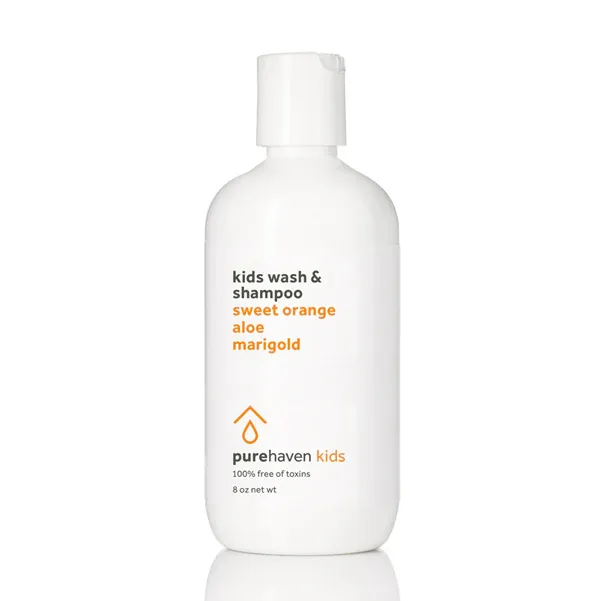
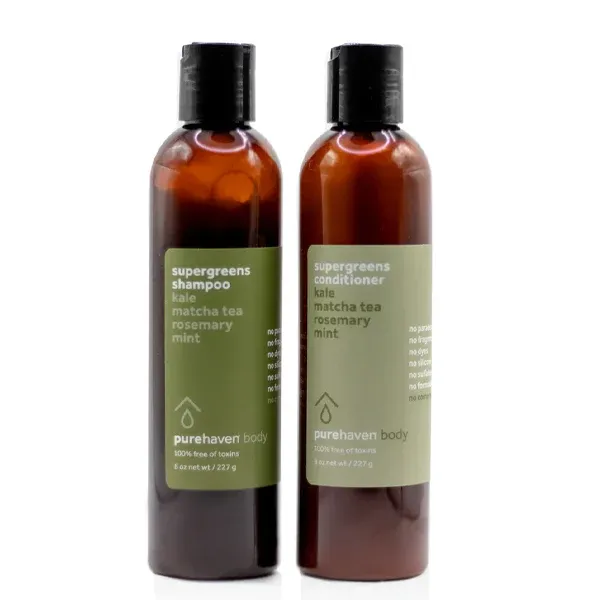
This is Mommy's shampoo and the kids have been warned and threatened, not to use for potions!
This is about reducing load, not eliminating joy.
One swap.
One upgrade.
One less daily exposure.
That is how sustainable change works.
In health & frequency,
— Kate

Hi, I'm Kate
As founder of Doable with Kate, I believe life and business should feel simple and aligned. My background in architecture shaped my love for structure and design, but my personal health journey led me into holistic wellness and non-toxic living.
Now I help women clean up their homes and businesses, build them systems that feel both authentic and profitable.


“Do the best you can until you know better.
Then when you know better, do better.” - Maya Angelou
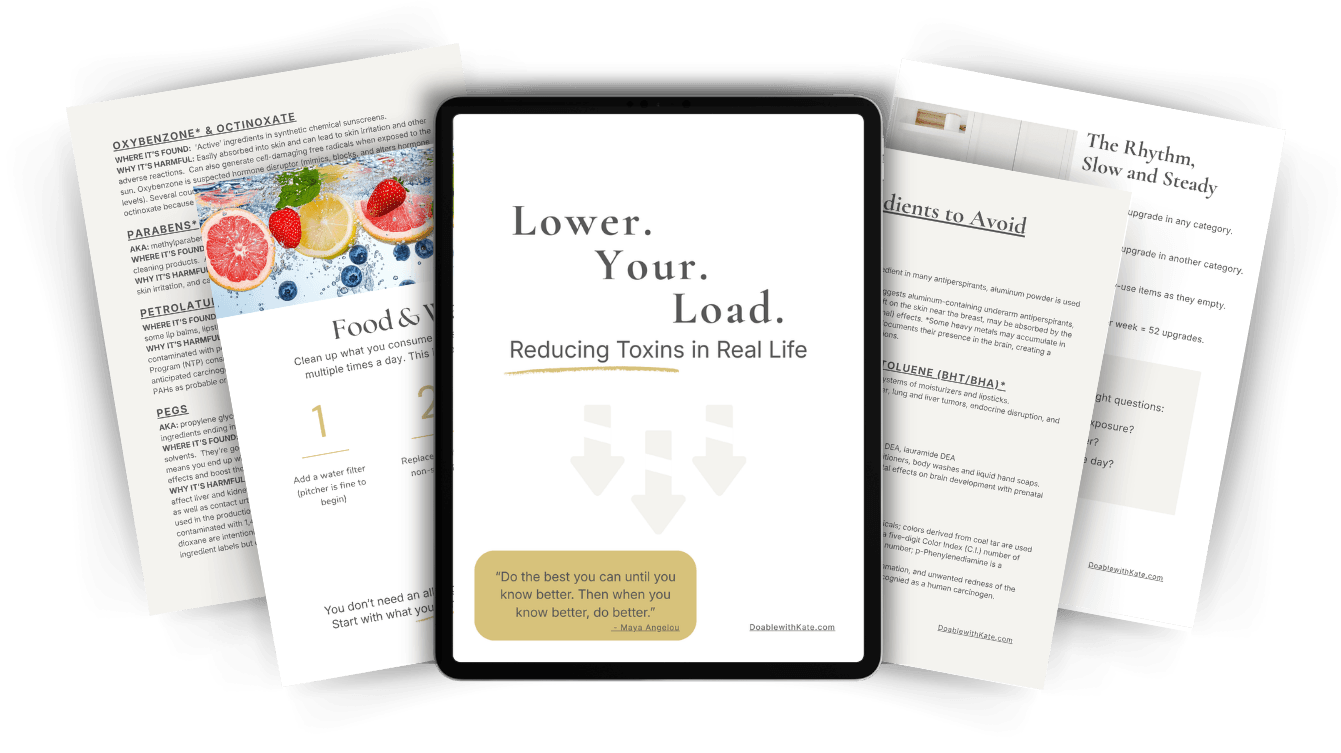
I've put together this guide 'Lower Your Load' explaining
the top 3 culprits of toxic exposure along with a
list of ingredients to avoid, so you can do better for yourself and your family.
We HATE spam. Your email address is 100% secure



© 2026 Kate Andrews | K8 Enterprises LLC - All Right Reserved | Terms & Conditions
This page may contains affiliate links, which means I may make a small commission at no extra cost to you.